
Start by figuring out your skin type, then pick products that match what your skin is asking for. Oily, dry, combination, sensitive, and mature skin each need something a little different. Watching how your skin behaves is the easiest way to tell.
Try this simple check. Wash your face with a gentle cleanser, pat it dry, and wait about an hour without putting anything on it. Then look at it in good light. If your face feels shiny across the forehead and nose, it leans oily. If it feels tight, looks flaky, or stings a bit, it leans dry. If the nose is shiny but the cheeks feel normal or dry, you probably have combination skin.
Notice how your skin reacts over a few weeks, too. Does it get red after new products? Does it break out when you change your routine? Sensitive skin often shows that reaction quickly, so keep track of what you start using and when. A notes app works fine for this.
Mature skin brings its own needs. Many people notice more dryness, fine lines, and uneven texture as they get older. Those changes show up most around the eyes and in areas that move a lot. That is one reason a concealer or foundation made for mature skin may look better than a standard formula, since the texture of the product matters as much as the shade.

Color Changing Foundation for Mature Skin, Light to Medium Tones
A color-adaptive foundation that starts white and blends into your skin tone, with a brush included.
Product information
Our review: 3.8 out of 5
Product links
If you have a skin concern you are not sure about, such as a rash, persistent redness, or pain, a doctor or dermatologist can look at it in person. Product choices can help with comfort and routine, but they are not a substitute for that kind of care.
Reading Ingredient Labels Without the Guesswork
Ingredient labels look like a wall of chemical names, but you only need a few tricks to make sense of them. Start with the ingredient list. In most countries, products list ingredients from the highest amount to the lowest, so the first five or so names tell you what the product is mostly made of. Water is often at the top of cleansers and lotions, which is normal. Look for the things you actually care about near the front if you want them to matter.
Next, learn the common types of ingredients. Humectants are things like glycerin and hyaluronic acid, which pull water into the skin. Emollients are oils, butters, and fatty alcohols like cetearyl alcohol that soften and smooth the surface. Occlusives such as petrolatum or dimethicone sit on top and slow water loss. Many good moisturizers include all three. If you see a long list of heavy oils and no humectants, it may feel rich but still leave your skin thirsty. Labels that say fragrance or parfum mean the scent is blended from ingredients the maker does not always list one by one, so if you react easily, look for "fragrance-free" on the front.
Be careful with words printed on the front of the box. Terms like "gentle," "clinical," "pure," or "natural" are marketing words with no set meaning in most places. The ingredient list is the more honest source. Also remember that some active ingredients, like retinoids, strong acids, and high-strength vitamin C, can cause stinging, peeling, or sun sensitivity. Those products usually come with directions on how often to use them and whether to wear sunscreen during the day. Follow those directions and check the maker's instructions, because the right amount and frequency differ by product.
When you are unsure about a specific ingredient, check the product's own safety information or ask a pharmacist. Do not rely on a single online list to decide whether something is safe for you, since reactions are personal and some ingredients can affect people with allergies or pregnancy differently. If a product stings or leaves a rash, stop using it and talk to a doctor.
If you want a practical example, a fragrance-free, dry-skin hand cream such as Prequel Skin Hand Cream for Dry Cracked Hands, 3.4oz, is a product you can judge by its label. Look for a moisturizing base and skip the scent if you have sensitive skin. Reading the list this way takes a minute and saves a lot of guessing.

Prequel Skin Hand Cream for Dry Cracked Hands, 3.4oz
A fragrance-free, non-greasy hand cream with a water-resistant layer that stays put after you wash up.
Product information
Our review: 4.2 out of 5
Product links
Matching Products to Your Daily Routine
Your daily routine is where good products either earn their spot or end up in a drawer. A cleanser that feels great on Sunday can feel like too much when you are rushing out the door at 7 a.m. Start by counting how many steps you realistically do each morning and each night, then match products to those slots.
Most people only need four basic slots: a cleanser, a moisturizer, sunscreen in the morning, and one targeted product if something specific bugs them, like dry patches or dark circles. Anything beyond that is a bonus. If you are short on time, put your effort into the cleanser and moisturizer, since those two touch your skin every day.
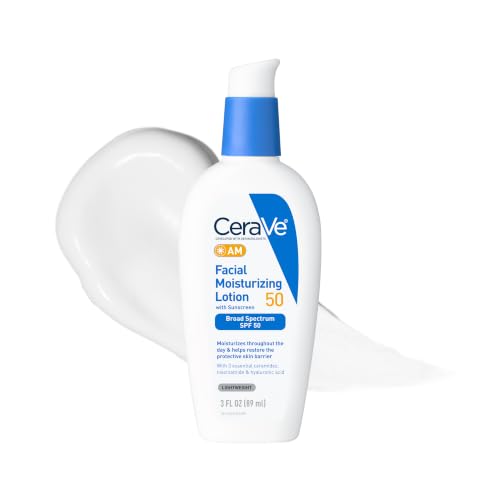
CeraVe AM Daily Facial Moisturizer with SPF 50 3oz
A lightweight daytime lotion with SPF 50 that blends in clear and leaves no white cast behind.
Product information
Our review: 4.2 out of 5
Product links
Think about where each product will live, too. A foaming cleanser works well in a shower or at a sink, while a rich cream might be easier to keep on a bathroom shelf you can reach without thinking. Pump bottles and tubes are handy when your hands are wet. Jars need clean fingers every time, which is worth knowing if you tend to forget.
Layering order matters, and it is easy to get wrong. A common approach is to go from thinnest to thickest: cleanser first, then any watery serums, then moisturizer, then sunscreen in the morning. If a product feels heavy and sits on top of everything, it probably belongs later in the order. Check the directions on each product, since some ask you to wait a minute before the next step.
For makeup, the order usually runs from skincare to primer, then concealer, then foundation, then powder if you use it. Give each layer a minute or two to settle so it does not pill or slide. If your concealer or foundation looks cakey by midday, the problem is often that the skin underneath was not moisturized enough, or that too much product went on at once.
Pros
- Skincare products made for a specific skin type, like oily or dry skin, are easier to pick out because the label tells you who they are meant for.
- A gentle cleanser made for oily skin can wash away extra oil without leaving your face feeling tight.
- Oil-to-foam cleansers designed for dry skin turn into a light lather, which many people find easier to rinse off than a heavy cream.
- Body washes made for extra dry skin are a simple way to get moisture on the whole body, not just the face.
- Tinted foundations that shift shade on the skin let you match your tone without guessing the right color from the bottle.
Cons
- Skincare products made for one skin type often feel wrong on other types, so a cleanser built for oily skin can leave dry skin tight.
- Many products labeled for mature skin or sensitive skin use fragrance or strong ingredients, which can irritate some people even when the label sounds gentle.
- Color changing foundations can be hard to match on some skin tones, and they may look different once they settle on the skin during the day.
- Cleansers and body washes sold as oil or foam formulas can feel heavy or leave a film for people who prefer a light, quick rinse.
- Specialty products like pheromone perfumes do not work the same way for everyone, and they can be too strong for shared spaces or sensitive noses.
Building a Simple Routine That Sticks
Building a routine you actually stick with is mostly about keeping it boring. Pick a few steps, do them the same way most days, and let the routine work for you instead of chasing every new bottle on the shelf.
Start small. Write down what you already do each morning and night, even if it is just splashing water on your face. Then add one thing at a time, like a moisturizer at night or sunscreen in the morning. Give each change a couple of weeks before you judge it. Changing three products at once makes it hard to tell what helped and what irritated your skin.
Keep the routine where you will see it. Put your cleanser at the sink and your moisturizer next to your toothbrush. Some people find it easier to set a phone reminder for the first week, then drop it once the habit kicks in. If you forget at night, try doing your skincare right after brushing your teeth, so the two habits stack together.
Watch how your skin responds over a few weeks, not a few days. Redness, stinging, or new bumps after a change are a reason to stop using that product and check in with a doctor or pharmacist. Dryness that improves after you add a moisturizer is a good sign the product is doing its job. Keep a short note on your phone with the date you started each product so you can look back later.
When you restock, buy the same product again before you try something new. A routine that works is worth keeping, and a simple setup with a cleanser, moisturizer, and sunscreen will serve most people well for a long time.

